Simplifying Compliance: A New Era for Companies?
Imagine managing multiple corporate filings for a routine company change. A change in directors, a shift in registered office, alteration of share capital, conversion of company status—each event often requires a separate form, separate documentation, and separate compliance tracking.
Now imagine accomplishing much of that through just two consolidated forms.
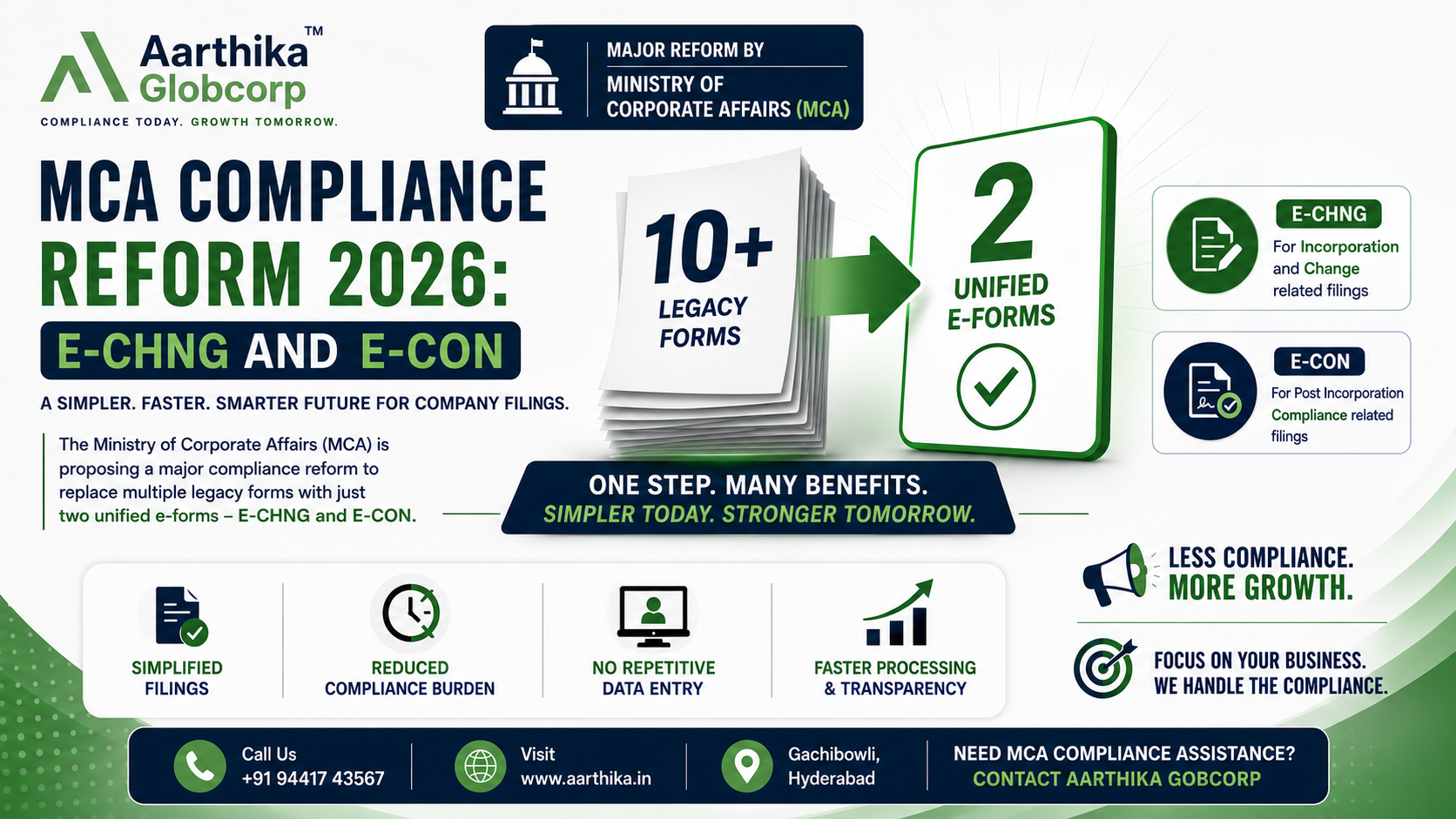
What may sound ambitious today is exactly what the Ministry of Corporate Affairs (MCA) is proposing through its latest compliance reform initiative.
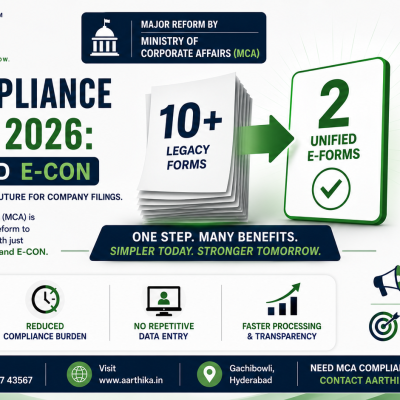
Under the proposed framework, several existing company filing forms could be merged into two comprehensive e-forms:
- E-CHNG (Change Form) – for reporting various corporate changes.
- E-CON (Conversion Form) – for handling different forms of company conversions.
If implemented, this reform could significantly reshape the corporate compliance landscape in India.
Why Is MCA Considering This Reform?
Over the years, India’s corporate compliance ecosystem has evolved considerably. While digitization through the MCA21 portal has improved accessibility, businesses, professionals, and startups continue to face challenges arising from fragmented filing requirements.
Currently, a single corporate event may trigger multiple filing obligations involving separate forms, attachments, verification procedures, and processing timelines.
This often results in:
* Increased compliance burden
* Higher professional costs
* Duplication of information
* Greater risk of filing errors
* Delays in regulatory processing
The proposed framework appears to address these concerns by moving towards a more consolidated and user-friendly filing structure.
Understanding E-CHNG: The Proposed Unified Change Form
The proposed “E-CHNG” form is expected to serve as a consolidated filing mechanism for various corporate changes.
Instead of filing multiple individual forms for different events, companies may be able to report several categories of changes through a single integrated form.
Potential areas that could be covered include:
* Change in registered office
* Changes in directors or key managerial personnel
* Alteration of share capital
* Changes in company structure
* Other corporate modifications requiring MCA approval or intimation
The objective is straightforward: reduce procedural complexity while maintaining regulatory oversight.
Understanding E-CON: The Proposed Conversion Form
Corporate conversions are often accompanied by multiple filing requirements and extensive documentation.
The proposed “E-CON” form aims to streamline conversion-related filings, which may include:
* Private company to public company conversion
* Public company to private company conversion
* OPC conversions
* Other statutory conversions permitted under the Companies Act
A unified conversion form could reduce procedural duplication and create a more standardized approval process.
What Could This Mean for Businesses?
If approved and implemented effectively, the reform could offer several practical benefits.
- Reduced Compliance Burden
Businesses may no longer need to navigate numerous forms for related corporate events.
A simplified filing structure can save valuable administrative time and effort.
- Faster Processing
Fewer forms generally translate into faster scrutiny, processing, and approval by regulatory authorities.
This could significantly improve turnaround times for corporate actions.
- Lower Compliance Costs
Reduced documentation and filing complexity can potentially lower professional and administrative costs, particularly for startups and MSMEs.
- Better Accuracy
Consolidated filings reduce repetitive data entry, thereby minimizing the chances of clerical errors and inconsistencies.
- Improved Ease of Doing Business
The reform aligns with India’s broader objective of creating a more business-friendly regulatory environment while maintaining corporate governance standards.
A Positive Step for Startups and Growing Businesses
For startups, compliance is often viewed as a necessary but resource-intensive activity.
Founders frequently juggle regulatory obligations alongside fundraising, operations, product development, and growth initiatives.
A simplified filing framework could allow entrepreneurs to spend less time managing paperwork and more time focusing on business expansion.
Similarly, professionals such as Company Secretaries, Chartered Accountants, and corporate legal advisors may benefit from a more streamlined and predictable filing process.
Challenges That Still Need Consideration
While the proposal appears promising, successful implementation will depend on several factors.
Some important considerations include:
* Clear transition guidelines from existing forms
* Robust digital infrastructure
* Comprehensive stakeholder training
* Well-defined filing procedures
* Adequate safeguards against misuse or incomplete disclosures
A simplified system must remain legally sound and maintain transparency without compromising regulatory effectiveness.
Is This the Biggest Compliance Reform of 2026?
It certainly has the potential to become one.
The proposed E-CHNG and E-CON framework reflects a broader shift towards smarter regulation, digital governance, and compliance simplification.
While the proposal is still subject to approval and implementation, it signals MCA’s intention to modernize corporate compliance and reduce unnecessary procedural complexity.
For businesses, professionals, and entrepreneurs, this is a development worth watching closely.
The future of compliance may not be about filing more forms—it may be about filing smarter.
Conclusion:
Corporate compliance is evolving. As regulatory frameworks become increasingly digital and business-centric, reforms such as E-CHNG and E-CON represent an important step toward a more efficient compliance ecosystem.
Whether this proposal ultimately becomes a game changer will depend on its execution. However, one thing is clear: simplifying compliance while preserving accountability is a direction that benefits both businesses and regulators alike.
As the proposal progresses, companies should stay informed and prepare for what could become one of the most significant corporate filing reforms in recent years.
“What do you think? Will E-CHNG and E-CON transform corporate compliance in India, or are there challenges that still need to be addressed?”